Last Updated on July 2, 2026 by David
What Causes Grout Residue to Persist on Newly Laid Slate Floors?
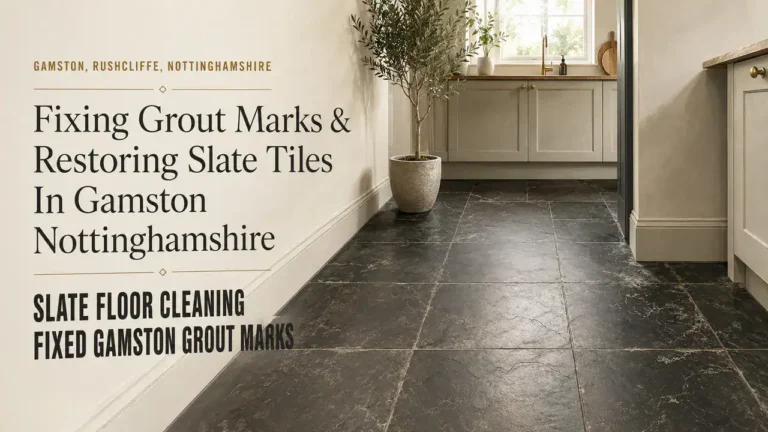
Is your slate floor marred by a cloudy grout haze following installation? This issue can give the floor a dirty appearance, even with regular cleaning, as the marks are not merely residual kitchen grime. In the Gamston kitchen, patches of cloudiness spread across the tiles, with darker stains in high-traffic areas and ingrained dirt near the entrance caused by outdoor grit and moisture.
The primary issue for the slate floor in the small Gamston kitchen, located in Nottingham, NG2 6NE, was the persistent grout haze that lingered after installation. Despite the homeowner’s diligent mopping and wiping, the floor still appeared uneven, marked, and dull because the residue remained trapped on the tile surface, evading effective cleaning.
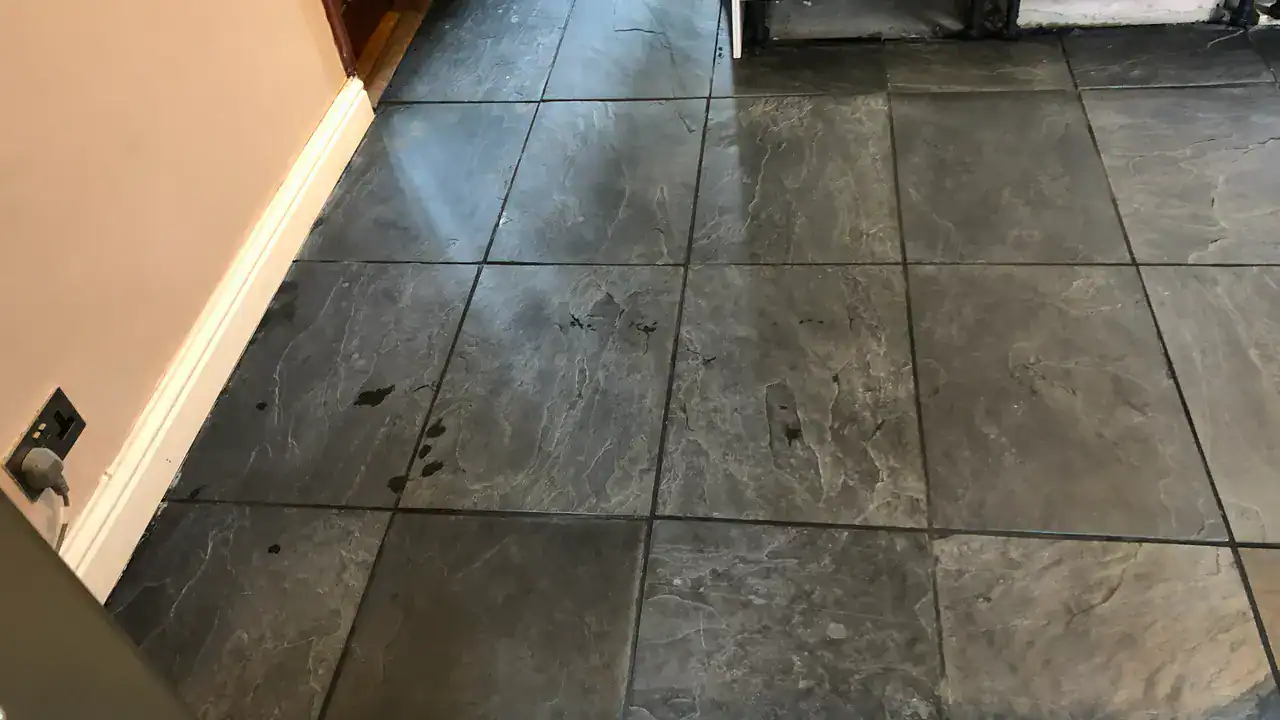
The entryway exacerbated the situation. Daily foot traffic introduced soil along a consistent path, while cooking activities, outdoor grit, wet shoes, and frequent washing contributed to the floor’s unsightly condition. It gave the impression that the slate itself was dirty rather than merely retaining installation residue.
Homes in Gamston, particularly around Rushcliffe, Nottinghamshire, predominantly consist of modern suburban residences, featuring numerous detached and semi-detached family houses, bungalows, and smaller terraces developed during the West Bridgford expansion. Slate floors are frequently installed in kitchens, utility rooms, entryways, garden-facing extensions, and open-plan kitchen-dining areas where durable natural flooring is essential for family living. In kitchen settings, slate must withstand foot traffic, spills from cooking, outdoor grit, and regular mopping. The broader context includes the NG2 postcode area.
Modern layouts in Gamston can create concentrated wear patterns, especially where rear doors, kitchen pathways, and utility entrances consistently introduce grit and moisture onto the same slate tiles. Textured slate can trap dirt within its surface and grout, resulting in a floor that still appears marked or uneven, despite regular cleaning efforts.
The grout lines also significantly impacted the overall appearance of the floor before any work was performed. Initially mid-grey, some areas had darkened and become inconsistent, leading to a perception that both the slate and joints were suffering from a general cleaning failure rather than highlighting distinct issues related to installation and foot traffic.
Seeking assistance became necessary for the homeowner, as repeated cleaning had not yielded any meaningful improvement. A precise evaluation of the floor’s condition was crucial, given that the visible problems included pale surface marks, soil from the doorway, and inconsistent grout colour in an area that should have been easy to maintain.
How Was the Bonded Grout Residue Carefully Removed Prior to Deep Cleaning the Slate?
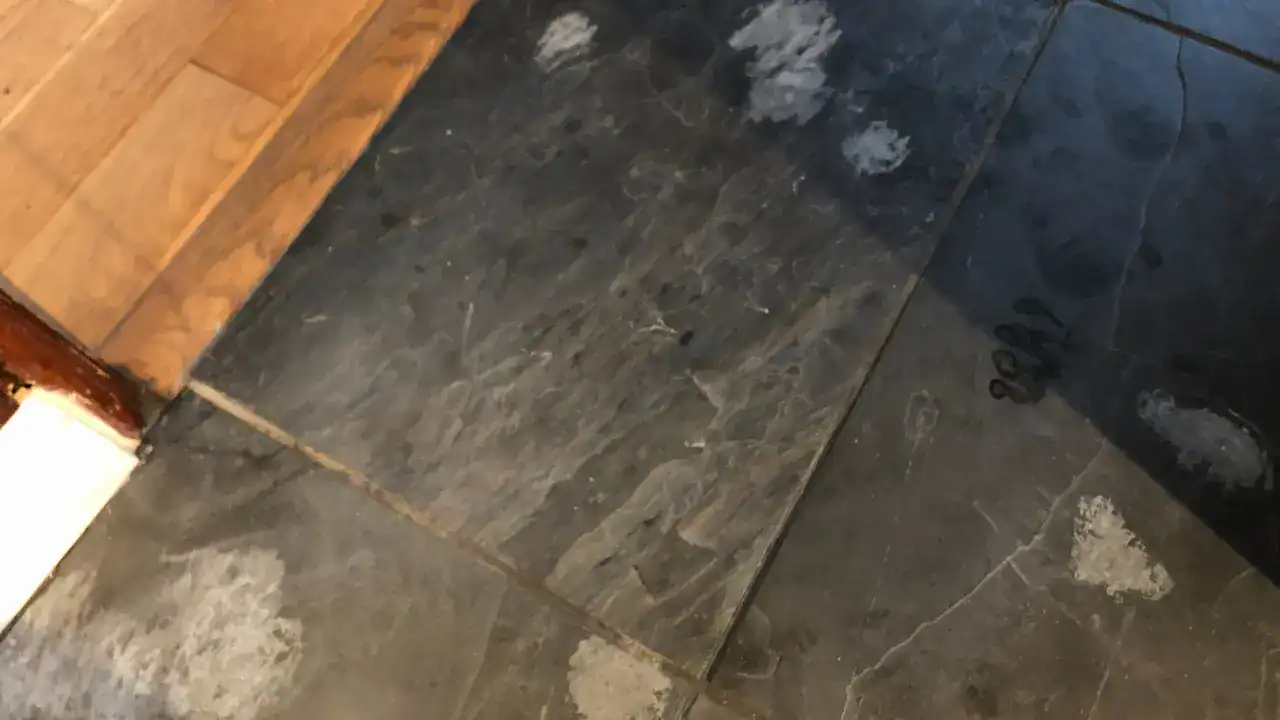
If your slate appears marked even after mopping, it is likely that bonded grout residue has embedded itself into the textured surface rather than sitting loosely atop it. The haze on the Gamston floor necessitated careful separation from the tile surface, as using excessive pressure or the wrong abrasives could damage the natural texture that characterises the slate.
Grout haze forms a thin, cement-based film that remains when installation residue dries on tile surfaces instead of being thoroughly washed away. Homeowners often notice pale smears, cloudy patches, and unclean areas that resist easy wiping. The correction process begins with the careful release of that residue before deeper cleaning can be effectively applied.
Hand diamond sanding blocks provided controlled contact on the affected slate since the residue had bonded unevenly to its textured surface. The technician worked meticulously on the visible stains, reducing the bonded material without flattening the natural ridges, damaging the tile edges, or complicating future cleaning efforts.
Understanding the behaviour of cement residue is crucial, as it differs from typical dirt on slate. A suitable residue release phase softens the bond, enabling mechanical action to detach the film, while careful rinsing and recovery ensure that loosened materials do not dry back into the surface texture and grout joints.
The riven surface texture creates ridges and troughs that trap dirt after every unsuccessful mopping. A flat wiping action skims over the raised portions, leaving diluted soil in the lower areas. The cleaning process had to combine manual work on the bonded marks with machine agitation across the main kitchen area.
Bonded grout residue must be extracted without compromising the slate’s natural texture.
Rotary cleaning became effective after the initial hand residue removal, as the surface contamination had been sufficiently loosened for controlled agitation. A polypropylene brush can navigate the uneven slate texture without being overly abrasive, while a carbon brush can provide deeper agitation where needed without grinding the surface.
Wet vacuum recovery completed each cleaning pass, as it is essential to remove loosened slurry from the floor while it remains suspended. The wet vacuum and slurry extractor efficiently eliminated dirty liquid from the tile surface and grout lines, minimising the risk of dissolved contamination re-adhering to the riven texture and causing the floor to appear patchy again.
A thorough grout detail cleaning further enhanced the joints that the rotary machine could not access completely. A grout scrub brush effectively lifted trapped soil from deeper grout lines, allowing the freshly cleaned slate and mid-grey grout to appear more even without leaving dark lines around a cleaner tile surface.
This residue-controlled approach is applicable to similar slate cleaning projects where grout haze and surface texture dictate the cleaning method. A separate case study on slate cleaning in Wimbledon offers further insights into controlled grout haze removal on slate. Effective sequencing ensures the focus remains on cleaning the existing floor rather than unnecessarily pursuing repair or restoration options.
What Improvements Were Noticed After Cleaning the Slate Surface?
<a href="https://limitsofstrategy.com/slate-floor-cleaning-and-sealing-for-bright-lasting-colors/"><a href="https://fabritec.org/slate-floor-cleaning-and-sealing-for-vibrant-colours/">Before cleaning</a></a>, the Gamston slate floor was marred by pale grout haze, dark soil accumulation in the doorway, and uneven grout lines that made the kitchen appear challenging to maintain. Despite the homeowner’s careful mopping and wiping, the bonded residue continued to trap dirt, rendering each cleaning effort feel temporary.
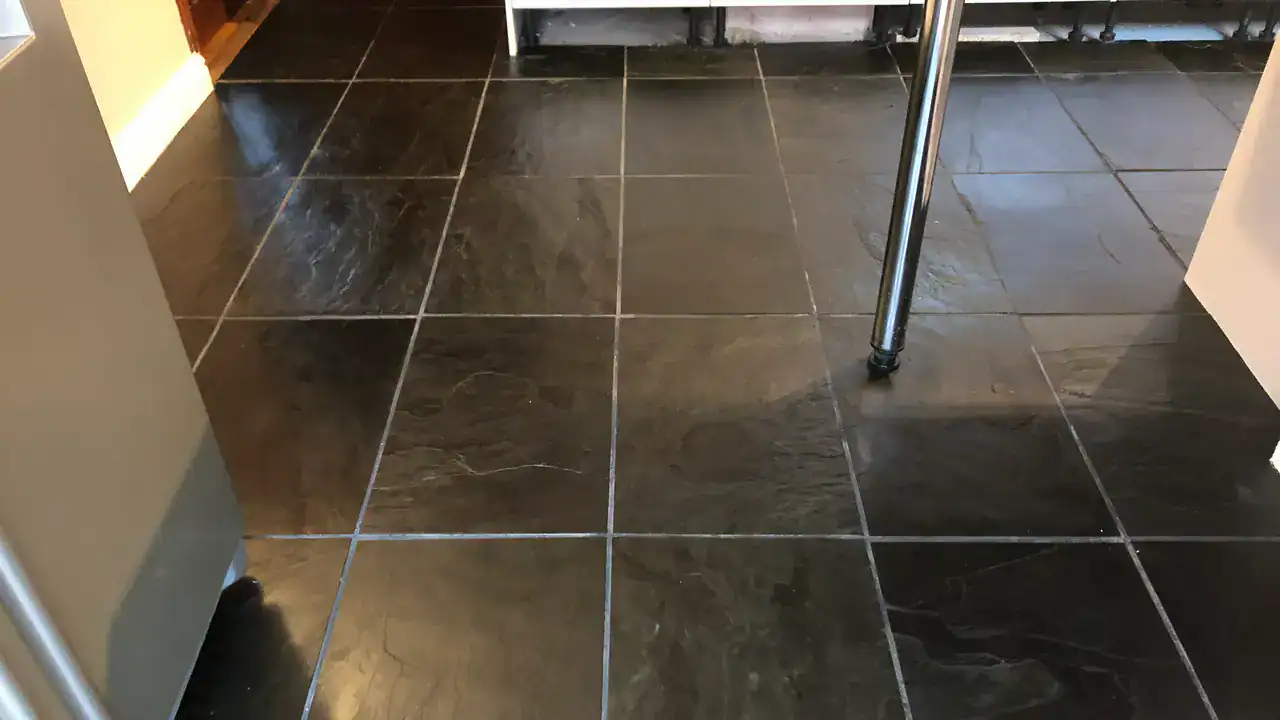
Upon completing the cleaning process, the tile surface appeared clearer as the grout haze no longer obscured the slate’s natural beauty. The doorway area showed significant improvement as ingrained dirt was effectively removed from the textured surface and grout, resulting in a more uniform finish than ordinary cleaning had previously achieved.
Applying a colour-enhancing sealer dramatically transformed the final appearance once the floor had dried thoroughly. Two coats of colour-enhancing urethane sealer deepened the natural black hue, enhanced the visual contrast in the stone, and provided a satin finish that simplified kitchen maintenance.
For the topical urethane sealer to bond evenly, a clean, dry, and residue-free surface was critical. The sealer added a low sheen and assisted in keeping future dirt closer to the surface, while thorough preparation prevented the patchy appearance that can occur when a finish traps contaminants beneath it.
Professional judgement also played a crucial role, as the grout did not require recolouring once cleaning had enhanced the overall floor appearance. David Allen’s extensive expertise with stone flooring led to a practical decision: the homeowner accepted the cleaned mid-grey grout, allowing the project to conclude at a satisfactory point where the floor was easy to maintain.
Where Can You Find Additional Insights on Slate Floor Cleaning Challenges?
Understanding slate cleaning issues becomes simpler when analysing a real floor and recognising how the symptoms interconnect. The Gamston kitchen required a tailored approach that aligned the grout haze, textured surface, soil movement, and sealing response to enable the floor to respond effectively to standard care.
More comprehensive information on slate cleaning assists homeowners in comparing similar challenges without converting every marked floor into a repair or full restoration project. The material hub on slate floors in UK homes provides broader insights on cleaning behaviours, surface textures, sealing options, and long-term considerations. This wider perspective places the Gamston case study within the context of common behaviour patterns observed in domestic slate floors.
Products Utilised in This Cleaning Guide
No external product links were included in the original article HTML. This section remains reserved for product references when the source article includes them.

David Allen — Abbey Floor Care
With over 30 years of experience in cleaning and restoring stone floors through Abbey Floor Care, David Allen addressed the installation grout haze and ingrained kitchen soil on this Gamston slate floor. His case study focuses on identifying the causes of visible marks, selecting controlled cleaning methods, and finishing slate to ensure the floor remains practical for maintenance.
The article Slate Floor Cleaning Fixed Gamston Grout Marks first appeared on https://www.abbeyfloorcare.co.uk
The article Slate Floor Cleaning to Remove Grout Marks in Gamston appeared first on https://fabritec.org
The Article Slate Floor Cleaning: Eliminate Grout Marks in Gamston Was Found On https://limitsofstrategy.com
References:
Https://limitsofstrategy.com/slate-floor-cleaning-eliminate-grout-marks-in-gamston/