After undergoing an eye examination, you will realise that obtaining your prescription is a vital stage in the overall process.
These measurements dictate how light should be adjusted to ensure it sharply focuses on the retina through the optical centre of a lens. For many, this aspect of eye care is the most familiar, as it is represented by the numbers found on a spectacles prescription.
Contemporary eyewear involves much more than just prescription measurements.
Advanced lens technology provides deeper insights into your eyes and how your glasses will align with your facial structure. This information enables the creation of lenses that are specifically tailored to the individual wearer, moving away from generic assumptions or average templates.
At Eyes by Design, Dr Nicholas Altuneg, known as Dr Nick, consistently highlights that personalised lens measurements focus on one key goal: ensuring that glasses are both comfortable and practical for daily use.
Understanding the Unique Characteristics of Your Eyes
Even if two individuals have similar prescriptions, their eyes can display significant differences.
Subtle variations in eye shape, optical features, and the pathway of light through the visual system exist. These differences may not be immediately noticeable to the glasses wearer, yet they can greatly influence the effectiveness of the lenses in providing optimal comfort.
Conventional lenses are often manufactured based on standard values derived from an average “typical” eye. While this approach is generally effective, it fails to account for the distinctive nature of each individual’s eyes.
Personalised lens measurements transcend these averages. Instead of relying on assumed characteristics, they facilitate the creation of lenses specifically tailored to the wearer, which Dr Nick emphasises as the key distinction between designing lenses based on estimates and using genuine, precise data.
Expanding Lens Design Beyond Basic Prescriptions
While a prescription is fundamental and serves as the basis for every pair of glasses, it does not fully encompass how a lens should be constructed for a specific individual.
By itself, it does not capture the intricate details required to ensure comfortable vision when wearing the glasses.
Incorporating personalised measurements adds an extra level of precision, providing detailed insights into the eye and the positioning of the selected frame. This synergy is crucial, as even the most expertly designed lens requires correct placement to function effectively.

The Essential Impact of Biometric Eye Measurements
A notable advancement in modern lens design is the incorporation of biometric measurements of the eye’s anatomy.
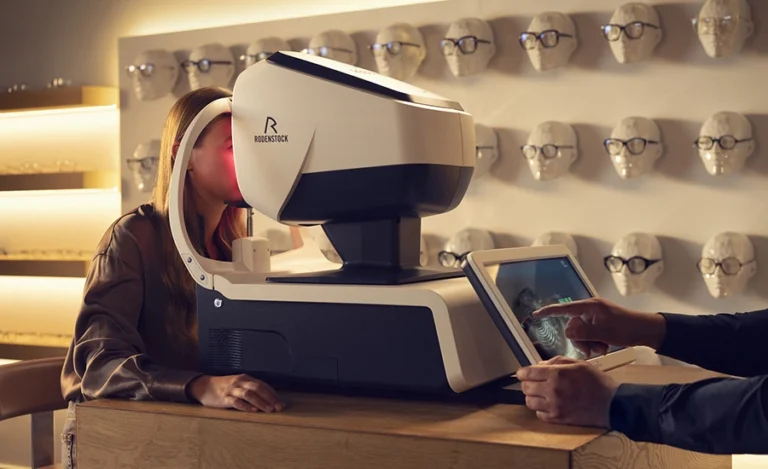
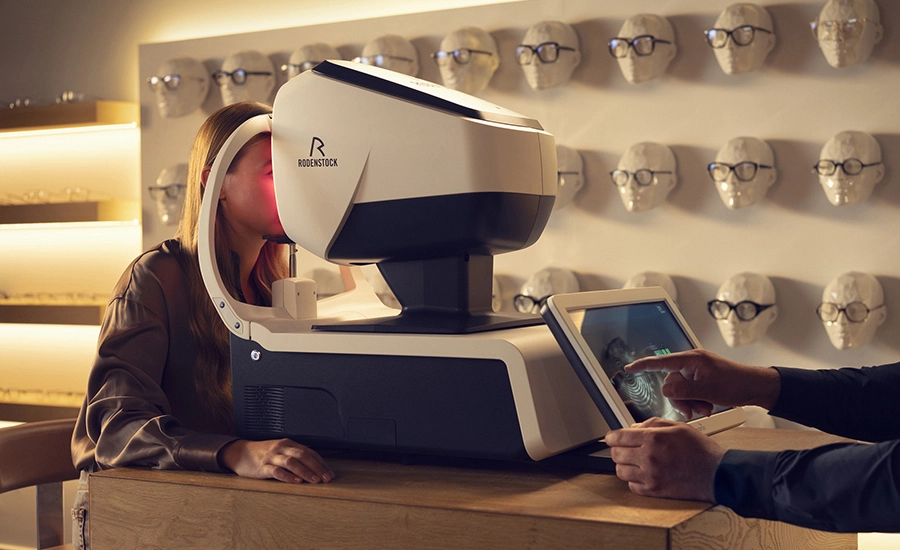
Biometry involves collecting highly detailed information about the eye’s structure and optical characteristics, allowing lenses to be crafted from precise, individual data rather than general assumptions.
At Eyes by Design, advanced biometric lens options, such as Rodenstock biometric lenses, offer a significantly different experience compared to traditional lenses, especially for those who wear glasses continuously or are prone to visual discomfort. Some patients may notice subtle enhancements, while others, particularly those with high visual demands, find that the increased precision provides a more natural visual experience.
The Importance of Proper Frame Alignment
Measuring the eye is only one part of the equation. Equally crucial is assessing how the frame—and thus the lenses—will align with the eyes when the glasses are worn.
This alignment is essential, as lenses do not function independently. Their positioning relative to the eye, including frame angle, distance from the eye, and the precise location of the optical centre, all impact their performance.
This is where cutting-edge dispensing technology and expertise become vital. Dr Nick and the team utilise precise centration and position-of-wear measurements to ensure the lenses are positioned as accurately as possible within your chosen frame. Tools like the ImpressionIST tower capture these measurements with far greater precision than visual estimation alone, guaranteeing that the lenses are customised not only to your eyes but also to how the frame sits on your face.
How Tailored Measurements Enhance Your Daily Vision
When personalised eye measurements and precise frame metrics are combined, the result is a lens system intricately tailored to the individual.
This leads to more natural vision, improved comfort throughout the day, smoother transitions to new glasses, and enhanced consistency across various visual tasks.
Most individuals observe these enhancements during activities such as reading, working on screens, driving, or switching between distances throughout the day—situations where even minor improvements in optical precision are crucial.
You do not need to grasp every technical detail to appreciate the benefits. What matters is that your glasses feel right, perform optimally, and complement your lifestyle.
The Growing Importance of Personalised Measurements
In today’s world, our eyes face greater demands than ever before.
Many individuals spend extensive time alternating between phones and computers, reading, driving, and navigating different environments, constantly adjusting their focus and requiring comfort during prolonged periods of near and intermediate work.
Even slight inaccuracies in lens fitting can become increasingly apparent. Glasses that are merely adequate may still function, but they will not provide the seamless experience that optimised eyewear can deliver.
Personalised lens measurements reflect a modern approach to eye care that bridges the gap between “good enough” and genuinely comfortable, reliable vision.

Achieving Optimal Precision in Vision
At Eyes by Design, this holistic approach is guided by the philosophy of Vision, Done Properly.
This philosophy encompasses more than just the prescription. It also includes the unique characteristics of the eye, lens design, frame fit, and the precise positioning of the lenses in front of the wearer once the glasses are complete.
When these elements align, glasses tend to feel more natural and better support daily activities. This approach to eyewear prioritises precision, personalisation, and long-term comfort.
Enhancing Your Vision for a Lifetime
For many, glasses are an essential part of daily life, relied upon for various activities including reading, working, driving, and socialising.
When lenses are crafted using personalised information and accurately positioned within the selected frame, they enhance clarity and comfort across all visual tasks.
At Eyes by Design, Dr Nick and his team are committed to understanding both the eyes and the individual wearing the glasses. This ensures that eyewear is not merely prescribed; it is thoughtfully designed and fitted to foster confident vision for life.
Frequently Asked Questions About Personalised Lens Measurements
What are personalised lens measurements?
These are additional measurements taken from your eyes and how a frame sits on your face, allowing for the design and positioning of lenses specifically tailored to you.
What are biometric lenses?
These lenses are created using detailed measurements of the eye, rather than typical average models, resulting in enhanced optical precision and visual comfort.
What does the ImpressionIST tower do?
It captures how your chosen frame aligns with your eyes, including position-of-wear and centration details, facilitating more accurate lens positioning within the frame.
Do personalised measurements truly make a difference?
For many patients, yes. The improvements often manifest as enhanced clarity, comfort, smoother adaptation, or more natural vision, especially for those with high visual demands.
Original Article First Published At: What Personalised Lens Measurements Actually Mean The Article: Personalised Lens Measurements Explained: What They Mean first appeared on https://writebuff.com
The post Personalised Lens Measurements: Understanding Their Significance appeared first on Limits Of Strategy.
References:
Personalised Lens Measurements: Understanding Their Significance