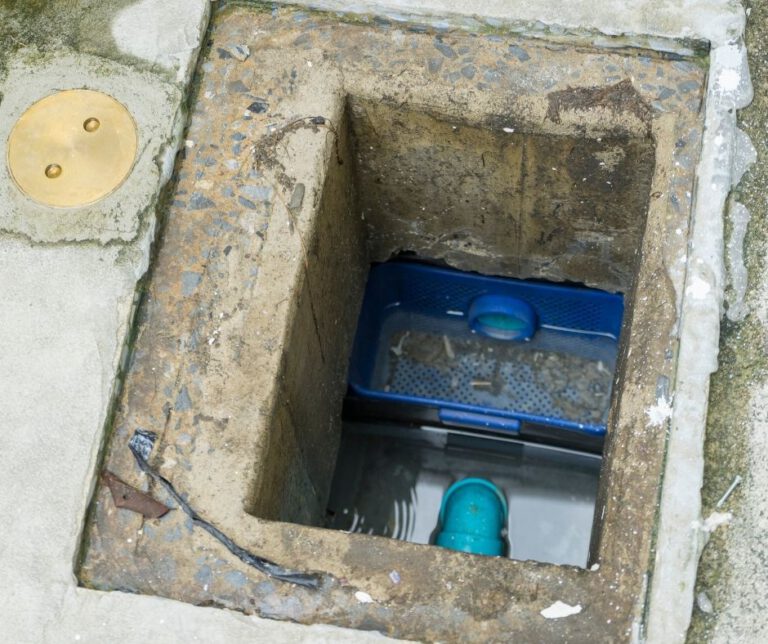
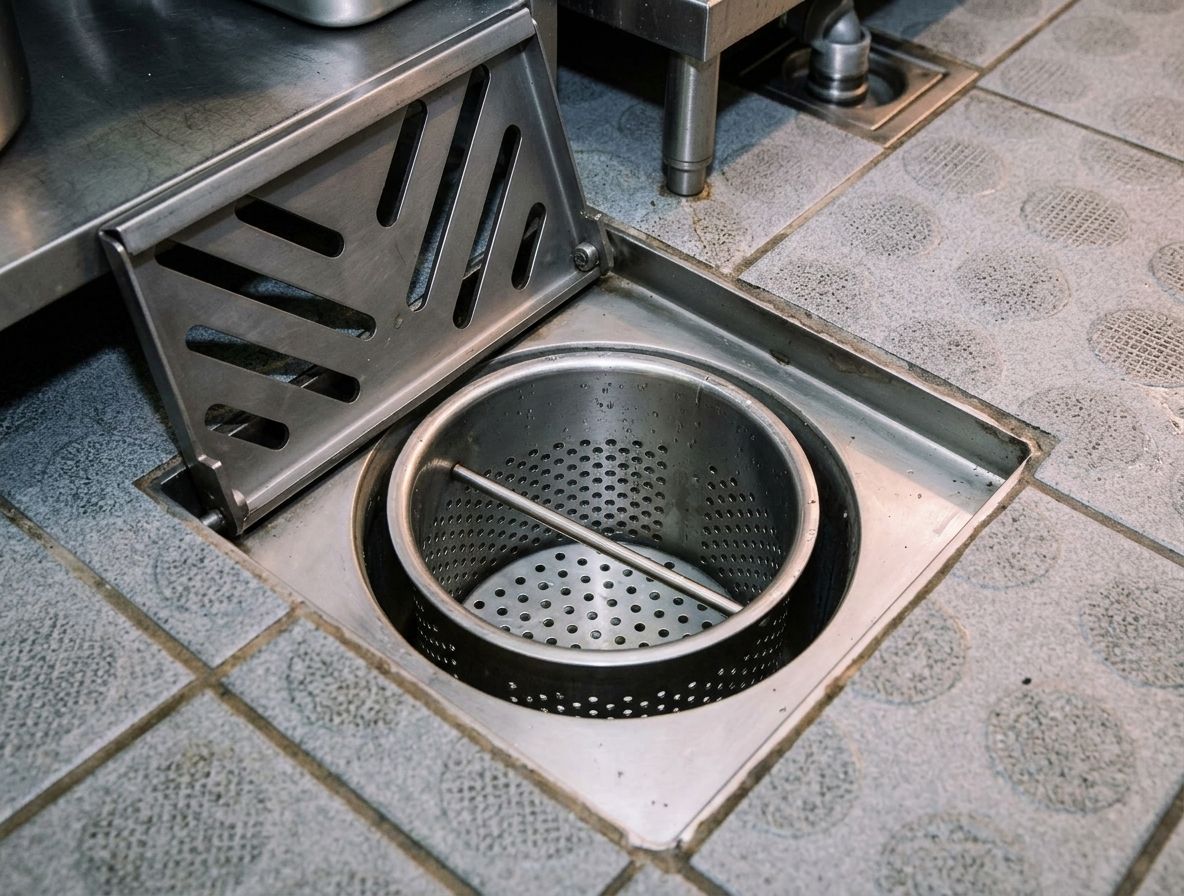
For establishments that prepare or serve hot meals and discharge wastewater into the Sydney Water sewer system, having an approved grease trap is vital. installing bucket traps in every preparation sink and floor waste is necessary. Prior approval from Sydney Water must be obtained before any discharge takes place.
After installation, ensure that the grease trap is regularly pumped out by an authorised Wastesafe transporter, as specified in your service agreement.
These initial points outline the essentials. The subsequent sections will delve deeper into operational guidelines, appropriate sizing of grease traps, and frequent mistakes that can lead to unnecessary expenses for food businesses.
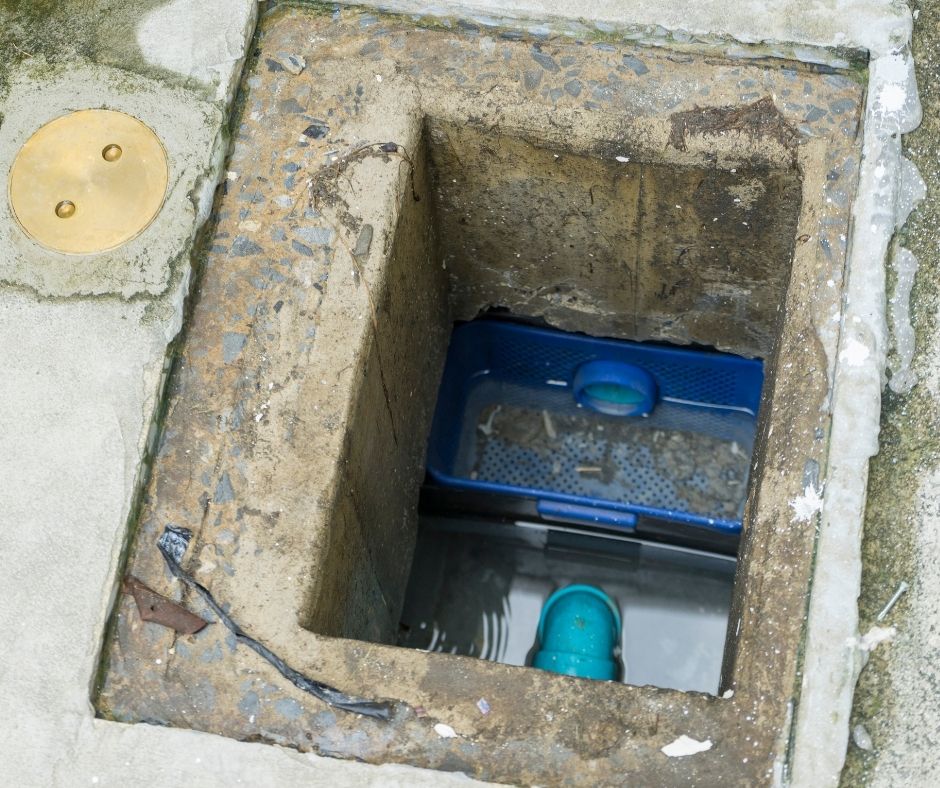
Why Is a Grease Trap Essential for Your Food Business?
Fats, oils, and grease (FOG) do not remain in liquid form indefinitely. They enter sinks while warm, cool down in the pipes, and ultimately solidify. The effects of a single kitchen discharging these substances can be substantial. When multiple kitchens across Sydney engage in the same practice, it leads to blockages and overflows in the public wastewater system, some of which can contaminate local rivers and oceans.
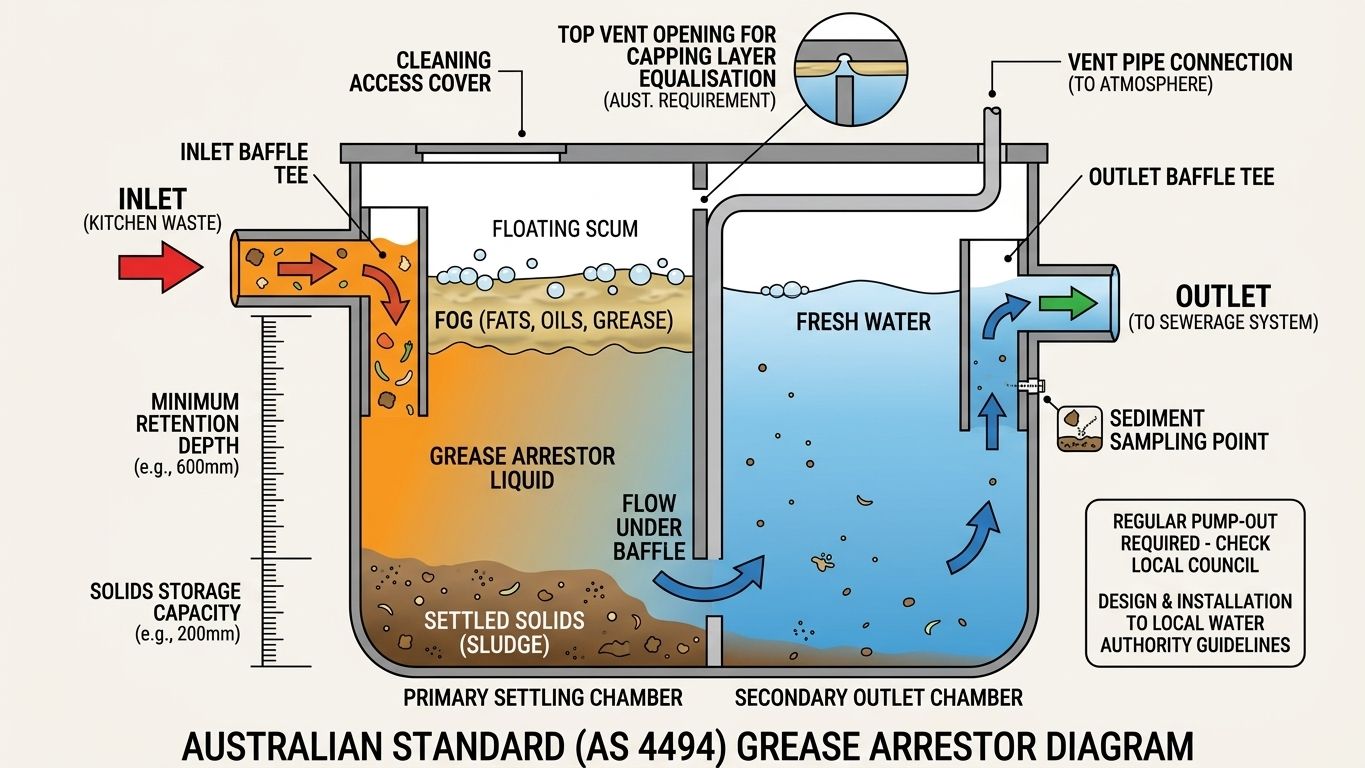
A grease trap functions by slowing the flow of wastewater, allowing it to cool, which enables the grease to separate and float while the water continues to drain. Bucket traps installed in sinks and floor wastes capture food scraps before they can enter the sewer system. Together, these measures ensure that your waste does not become a community issue.
Which Authorities Regulate Grease Traps?
Business owners often find the regulatory landscape confusing due to the involvement of multiple authorities.
Sydney Water oversees what can be discharged into the sewer system. Any discharge that exceeds standard household wastewater is classified as trade wastewater, requiring their approval. They also determine which grease traps are acceptable, the necessary sizes that fit your specific needs, and the frequency of pump-outs.
Detailed requirements can be found on sydneywater.com.au, including guidelines for installation.
Your local council also plays a significant role in regulating food businesses. Council inspectors evaluate your operations, including your waste disposal management practices.
If your business operates outside of Sydney Water’s jurisdiction, your local water utility will assume the responsibilities of Sydney Water, and their requirements may vary.
What Steps Must Be Taken Prior to Opening Your Food Business?
The first step is to secure approval from Sydney Water. You must apply for permission to discharge trade wastewater. Familiarise yourself with the application process, and they will reach out to discuss your specific business requirements.
This application process is free. It’s crucial to complete this step before purchasing or installing any equipment. Acquiring a grease trap that is not approved for your premises can result in expensive errors.
Next, ensure that you have the appropriate pre-treatment systems in your kitchen. For most food establishments, this usually includes:
- In-sink bucket traps: installed in every food preparation sink.
- In-floor bucket traps: installed in all floor wastes within food preparation and cooking areas.
- A correctly sized grease trap: chosen from Sydney Water’s approved list and sized according to your maximum hourly flow.
Ensure that the grease trap is installed by a licensed plumber, following the manufacturer’s guidelines, Sydney Water’s specifications, and the Plumbing Code of Australia. Upon completion, your plumber should provide you with a certificate of compliance, which you must keep for your records.
We specialise in installing grease traps for cafés, restaurants, and takeaway shops across the Hills District and Northwest Sydney, covering locations from Castle Hill and Bella Vista to Rouse Hill and Marsden Park. If you are fitting out a new premises, contact us early so we can assist you in sizing and placement before you make any commitments.
How Do You Determine the Correct Size for Your Grease Trap?
Sydney Water allows grease traps with capacities ranging from 1,000 to 5,000 litres. Smaller units are inadequate for effectively capturing grease, while larger traps can become increasingly difficult to clean and service. In high-demand areas, such as busy shopping centre food courts, multiple traps may be necessary, with a collective capacity of up to 30,000 litres. Beyond this threshold, a centralised treatment system, such as dissolved air flotation, must be installed.
Sydney Water provides guidelines for minimum sizes for various types of businesses. Here are several examples:
- Cafés, snack bars, and coffee lounges serving hot food: 1,000 litres.
- Takeaway shops, food court outlets, pizza shops, and charcoal chicken: 1,000 litres.
- Restaurants with 1 to 69 seats: 1,000 litres.
- Restaurants with 70 to 199 seats: 1,500 litres.
- Restaurants with 200 to 399 seats: 2,000 litres.
- Restaurants and function centres with 800 to 1,000 seats: 5,000 litres.
- Supermarkets with a chicken cooker: 1,500 litres plus a grease removal device.
These figures represent minimum requirements and should not be regarded as targets. Sydney Water advises sizing your trap based on your current and projected maximum hourly flow. If you plan to extend your operating hours or introduce new equipment like a fryer, accommodating this now will be more cost-effective than needing to excavate later. An undersized trap will struggle to treat your wastewater effectively, potentially leading to Sydney Water mandating additional pre-treatment systems.
What Installation Standards Must Your Plumber Adhere To?
The placement and connection of the grease trap are just as important as its size. Sydney Water’s regulations encompass the following requirements:
- All wastewater must be directed to the trap: Wastewater from food preparation areas, floor wastes, kitchen sinks, dishwashers, and garbage disposal areas must flow through the grease trap.
- Proximity to the kitchen: Long pipe runs can cause grease to accumulate before reaching the trap. If unavoidable, measures like heat tracing or steeper pipe gradients can help mitigate this issue.
- Gravity drainage: The trap should rely on gravity for drainage into the sewer. Pumped systems incur higher operational costs and pose a risk of overflow inside your premises if a pump malfunctions.
- Proper venting: Adequate ventilation is required for wastewater to cool and facilitate grease separation. A poorly vented trap may run too hot, allowing grease to bypass the trap.
- Space above the trap: There should be sufficient clearance above the trap, at least equal to its depth, to allow for servicing access.
- Access for waste collection: Your waste removal contractor should have nearby parking, and Sydney Water must have safe access for inspections. Multi-storey buildings may require a fixed pump-out line leading to street level.
What Are Your Ongoing Responsibilities After Installing a Grease Trap?
This crucial aspect is often neglected. A grease trap is an ongoing investment; it comes with continuous obligations as outlined in your agreement with Sydney Water.
Your agreement specifies how frequently the trap must be pumped out, which depends on its size, the volume of waste generated, and its grease content. An authorised Wastesafe transporter must conduct the pump-out, during which they will empty the trap, clean and scrape its internal surfaces, and scan a barcode on-site to provide Sydney Water with a service record. Be aware that Sydney Water charges a management fee for the Wastesafe system, and your transporter will bill you separately for pump-out and disposal services.
The schedule in your agreement reflects the minimum frequency. If your trap is blocking or emitting unpleasant odours before the next scheduled pump-out, this indicates that your kitchen is producing more grease than anticipated, prompting a discussion with us or Sydney Water.
You are also responsible for maintaining the trap’s functionality. Issues such as a damaged baffle, a cracked lid, or leaks indicate that the trap is not performing its intended function. Grease traps typically have a long lifespan, but they do degrade over time. Older traps that have accumulated grease for extended periods can be challenging to repair. A licensed plumber can advise whether repair or replacement is the best option. If you choose to proceed with repairs or upgrades, you must apply through Tap in to amend your agreement beforehand.
It is also crucial to inform Sydney Water of any changes to your operations. Adjustments to your menu, extended trading hours, new cooking equipment, or changes in business type can all impact what is required of you.
What Common Mistakes Should Be Avoided?
Certain habitual practices can violate your agreement or hinder the trap’s effectiveness, often resulting in both problems:
- Disposing of waste oil down the drain: Used cooking oil should be collected in a container and sent off-site for recycling, never poured down the sink or grease trap.
- Using enzymes, bacteria, or odour treatments: Sydney Water prohibits the introduction of solvents, enzymes, natural or engineered bacteria, odour control agents, or pesticides in grease traps.
- Excessive detergent use: Detergents can break down grease, allowing it to pass through the trap. Using less detergent will save money and enhance the trap’s efficiency.
- Installing garbage grinders or in-sink disposal units: These devices are not permitted in commercial premises, and Sydney Water can disconnect any business that installs them.
- Introducing other waste into the trap: Waste from equipment like vegetable peelers should not be sent to the grease trap.
What Are the Consequences of Not Complying with Regulations?
Sydney Water may take action against non-compliance, and repeated violations of your agreement can lead to serious repercussions, including disconnection in cases of prohibited equipment. Local councils can also enforce compliance during food premises inspections.
The regulatory body is not always the immediate concern. The primary issue often emerges as a blocked grease trap on a busy Friday, leading to unpleasant odours wafting into the dining area and halting kitchen operations until the blockage is resolved. Maintaining compliance and ensuring your kitchen runs smoothly are essentially intertwined responsibilities.
What Are the Most Commonly Asked Questions?
Is a grease trap necessary for a small café?
If your establishment cooks or serves hot food, Sydney Water mandates the installation of a grease trap, regardless of the number of seats. For cafés, snack bars, or coffee lounges serving hot food, the minimum required capacity is 1,000 litres.
Who determines the correct size of my grease trap?
Sydney Water sets minimum sizes based on business type, with the final size depending on your maximum hourly flow. We can assist you in determining the right capacity and guide you through the Sydney Water application process before you make any purchases.
Can I install a grease trap by myself?
No. Installation must be conducted by a licensed plumber in accordance with the manufacturer’s guidelines, Sydney Water’s requirements, and the Plumbing Code of Australia. You should receive a certificate of compliance upon completion.
How often should a grease trap be pumped out?
The frequency of pump-outs is determined by your agreement with Sydney Water, based on your trap’s size, waste volume, and grease content. If the trap is blocking or emitting odours before the next scheduled pump-out, the interval may be too long for your kitchen’s needs, regardless of what the paperwork states.
Who is authorised to conduct pump-outs on my grease trap?
Only an authorised Wastesafe transporter is permitted to perform pump-outs. They scan a barcode at each service to ensure Sydney Water can track the waste from your premises to its final disposal.
Is there a fee for applying to Sydney Water?
The application process through Tap in is free. Once you are operational, Sydney Water charges a management fee for the Wastesafe system, while your transporter will bill you separately for each pump-out service.
Can I use enzyme or bacteria treatments to reduce pump-out frequency?
No. Sydney Water does not permit the use of enzymes, bacteria, solvents, or odour control agents in grease traps, and these substances will not change the pump-out frequency outlined in your agreement.
We have taken over a café that already has a grease trap. Are we automatically compliant?
Not necessarily. It’s important to reach out to Sydney Water through Tap in early to confirm whether the existing agreement and grease trap are suitable for your business, especially if your menu or hours differ from the previous owner’s. Addressing this before your first inspection is significantly easier than rectifying issues later.
What if our grease trap is now undersized?
This is a common issue, particularly following menu changes or extended trading hours. Upgrading the trap is possible, but you must first apply to Sydney Water to amend your existing agreement. Taking this step before undersizing leads to regular blockages is advisable.
How to Ensure Effective Compliance with Grease Trap Regulations?
Many grease trap complications arise from having a trap that is improperly sized for the business or a pump-out schedule that aligns more with administrative requirements than actual kitchen needs. Sometimes, staff on-site may not know the correct contacts for assistance.
If you are launching a new food business, taking over a premises, or dealing with issues related to an inherited grease trap, consult with The Plumbing Paramedics. We specialise in the installation, servicing, and repair of grease traps for commercial kitchens throughout Sydney’s Hills District and Northwest. We can provide insights into what your premises will likely require before any financial commitments are made. Reach out to us at 0430 054 007.
If you operate a food business in Sydney, you’ve likely been informed about the necessity of a grease trap. the specifics regarding who mandates this requirement, what you must do post-installation, and who will follow up for compliance are often not thoroughly explained.
This is the straightforward version.
Original Article First Published At: Grease Trap Requirements in NSW: What Your Business Actually Has to Do
The Article: Grease Trap Requirements in Nsw: Essential Business Actions first appeared on https://writebuff.com
The post Grease Trap Requirements: Key Actions for Nsw Businesses appeared first on Limits Of Strategy.